Two Lanes North, One Lane South
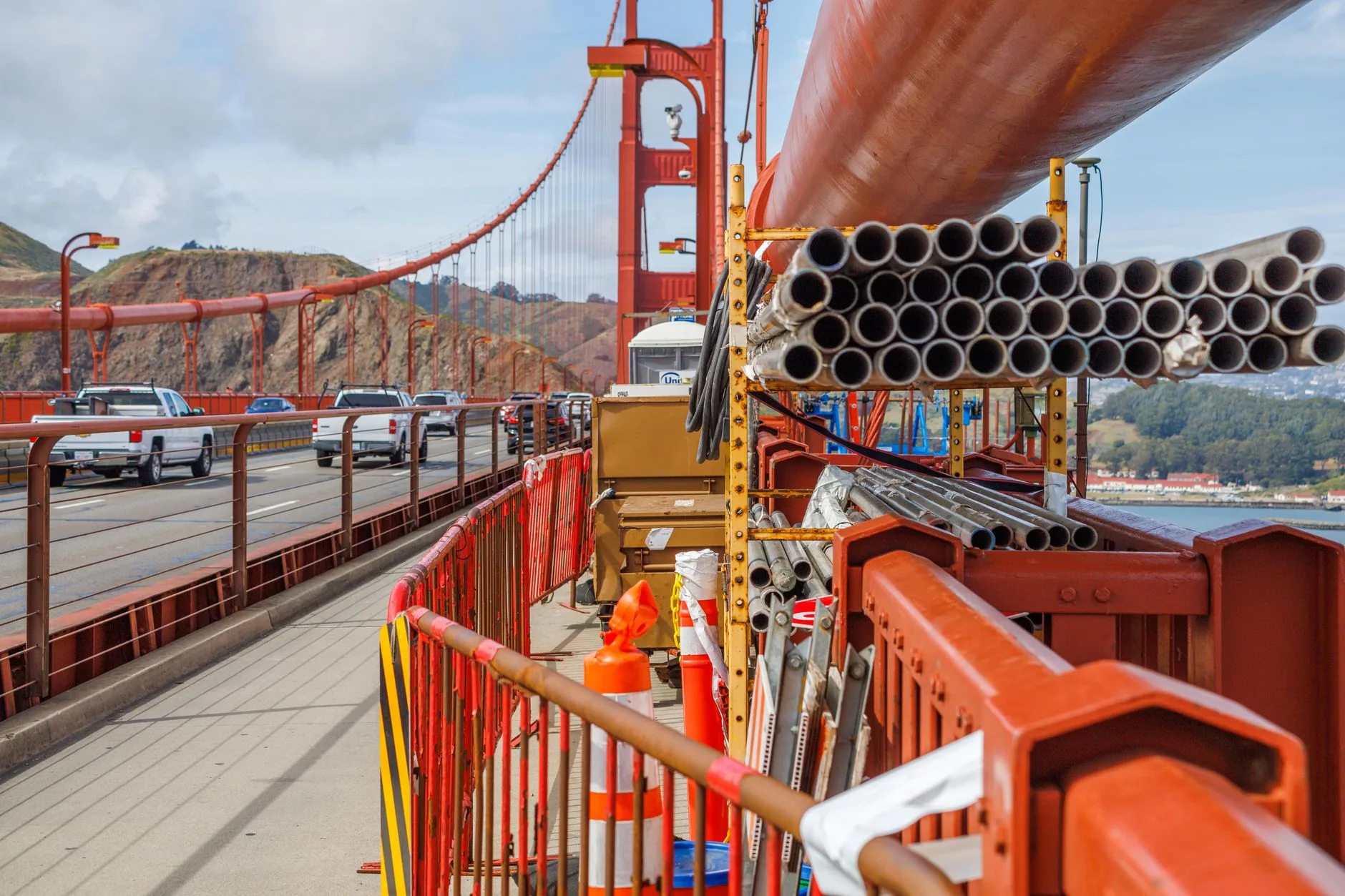
The Golden Gate Bridge District began overnight lane closures for seismic retrofit construction on Monday 5 October 2026. The closures run Monday to Friday, from approximately 8:00 p.m. to 5:00 a.m. The bridge carries traffic in both directions on every one of those nights.
The district notice for 19 to 23 October 2026 records the lane count. One lane stays open southbound. Two lanes stay open northbound. Southbound is the leg that leaves Marin County and enters San Francisco. Northbound is the leg that leaves San Francisco and enters Marin County.
A coach taking a group from a city hotel to a Sausalito or Mill Valley venue runs northbound inside two open lanes. The return runs southbound inside one open lane. A group sales contract for a north-side evening sells both legs.
Six Questions for the Coach Operator
Put these to the operator before the evening event contract is signed. Each one carries an answer the run sheet can hold.
Where does the operator plan the northbound crossing? A departure that clears the bridge before 8:00 p.m. uses the full roadway.
How many lanes does the operator plan the return on? The published count is one southbound lane.
What delay will the operator warrant, in minutes? No figure appears in the district notices, in the weekly schedule or in the trade coverage. The operator's own figure is the only one a planner can write into a contract.
Does the quote carry the Friday night window? That window ends at 7:00 a.m. Saturday. Every other night ends at 5:00 a.m.
Who reads the weekly notice, and on which day? The district issues the schedule as a dated notice. The 12 October notice covered 12 to 16 October and 19 to 23 October.
What happens to the transfer when the district cancels the work for weather? A cancelled closure restores all six lanes.
Who Cancels, and Who Cannot
The district holds the schedule. Its staff monitor traffic and weather and cancel work when conditions require it. The district skips closures on holidays: the notice for 12 to 16 October records no closures on Monday 12 October, under Caltrans holiday restrictions.
The group sales team holds the wording it signs. Write the crossing time as its own line in the contract. Put the venue arrival on a second line. The operator then carries a defined commitment on the leg the district narrows.
Buffer Arithmetic for the Run Sheet
Work ends by 5:00 a.m. Tuesday to Friday. On the Friday night the work ends at 7:00 a.m. Saturday. All six lanes open at that point.
A coach booked to cross southbound at 4:40 a.m. sits inside the single-lane window. A coach booked at 5:20 a.m. sits outside it. Put the buffer after the published completion time. The completion time ends the work, and the queue drains after it.
The evening rule mirrors that one. Build the northbound crossing to finish before 8:00 p.m., so a departure at 7:15 p.m. from a downtown hotel meets the window at the bridge.
Two numbers belong on the run sheet for every closure night. The first is the last northbound departure that clears the bridge by 8:00 p.m. The second is the first southbound departure after 5:00 a.m. Hold the whole group movement to those two.
Wording That Survives a Weather Cancellation
A protocol fixed to closure nights fails on the night the district cancels the work. Build the protocol off the notice, and re-read the notice in the week of the event.
Two sentences carry the contract. The first records the crossing window as published. The second records the district's right to cancel for weather or for a holiday, and it records that the crossing runs on all six lanes when a cancellation lands.
The North-Side Contract Reviews Every Week
The district lists Phase 3B as 2026 to 2036. It lists two consecutive construction contracts for the phase. The first was awarded in October 2025 at $864 million and runs approximately six years. Construction began in early 2026.
A programme of that length puts the weekly notice on the sales calendar as a standing item. One person reads it. One person updates the run sheet template. The update lands before the contract goes out.
What This Record Does Not Publish
No district notice here carries an overnight traffic volume, a delay in minutes, a coach standing arrangement on either side of the crossing, or a group rate. The district publishes the lane count and the hours. The operator publishes the schedule it will hold.
San Francisco hotels sit south of the crossing. Marin County hotels sit north of it. Every line of the contract names the side it covers.