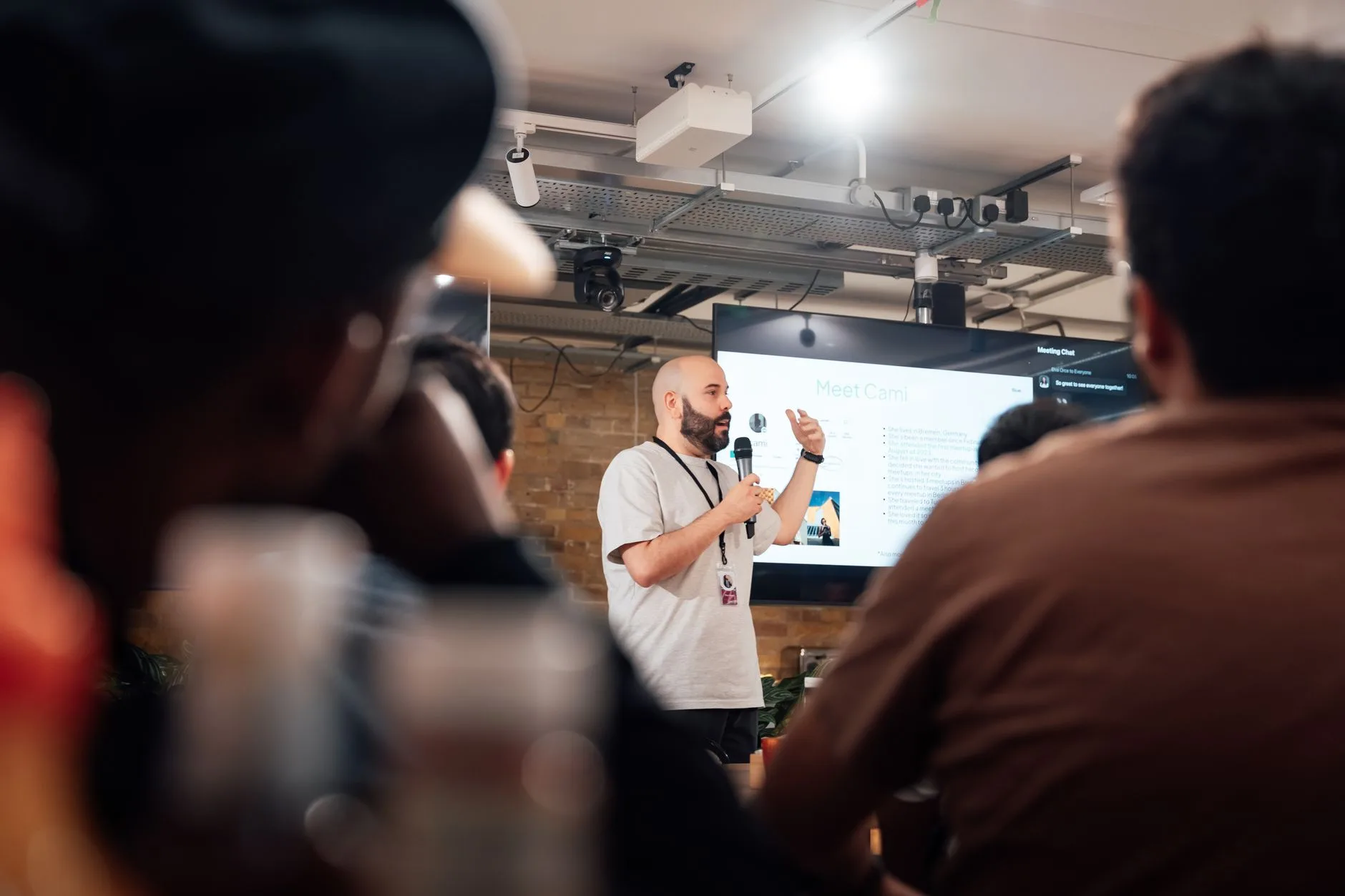
A Summit Programme Built on the Trace Theme
The Adventure Travel World Summit 2026 ran in Quebec City from 14 to 17 September. The organiser, the Adventure Travel Trade Association, estimates 800 tour operators, destination representatives, adventure travel writers and thought leaders at the gathering.
The summit's theme was Trace, given as "the paths we follow. The marks we leave." The association's theme text asks the industry to look backward at the wisdom, cultures and landscapes that shaped it, and names "indigenous knowledge systems that have read the land for centuries" among them. The association published its programme review on 12 October 2026, on Indigenous Peoples' Day.
On the Main Stage
Nunavik and Ungava partnered with the association to host lunch on one day of the summit. Delegates watched katajjaq, a vocal tradition usually performed by two women facing each other who trade rhythmic sounds until one laughs or runs out of breath.
The association's review names the keynote "First Hosts, First Voices: Indigenous Leadership and the Future of Adventure" as the summit's closing session. It places Indigenous leadership at the center of how adventure travel is designed, from land and storytelling to visitor education and how tourism income is shared.
The Guide Standard, in Two Sessions
Two sessions on the Adventure Travel Guide Standard drew delegates from Nunavik, the Inuit region of northern Quebec. A representative of the Nunavik Tourism Association described organizing training for Inuit who run tourism businesses. Staff from Tursujuq, Quebec's largest national park, described leading trips alongside Inuit guides. The park team said its safety training is already strong, and next year's training budget goes to natural history, culture and interpretation.
The facilitators said the standard was expanded in 2021 to add quality and meaning to safety and sustainability. One facilitator put it as "telling our stories, especially Indigenous communities. But all of our communities, we all have a story to tell." In Guyana, where many guides are Amerindian and speak another language at home, the team used role play and activities in place of a 47-page manual.
A River With Legal Standing
In the Protected Areas session, the Quebec outfitter Matthieu Bourdon told the story of the Magpie River on the Cote-Nord. The Innu paddled it for thousands of years to reach their winter hunting territories.
The river faced a hydroelectric dam. A local alliance formed with the Innu Council of Ekuanitshit and the regional county municipality of Minganie. In 2021 the two bodies recognized the Magpie as a legal person, and the Innu council now leads the work. Bourdon said the project has brought visibility to the First Nation and funded community projects, among them a cultural house.
A Lodge That Passes to the Community in 2049
Rob Moffett of Ongava described a 25-year joint venture with the Hai||om, the San community whose ancestral land includes Namibia's Etosha National Park. The new concession centers on Ngabao, a waterhole that Hai||om oral history holds sacred because it never failed in drought.
A lodge and a community rhino reserve are under construction, and in 2049 the community takes over full ownership of the business. Moffett said "I've seen communities inheriting sustainable tourism businesses upon their ancestral land." His first piece of advice to operators was to "figure out who the Indigenous folks are, the First Nation, and try and find ways to help them align with sustainability and long-term benefits upon their ancestral land."
Indigenous-Led and Indigenous-Owned
In the Scaling Responsibly session, Phil Wyndham, who oversees four adventure brands in Australia and New Zealand, said "What is uniquely Australian is our Aboriginal culture. No one else can do that." Every itinerary his team reviews now needs an Indigenous-led, Indigenous-owned experience.
Wyndham described one lesson from Queensland. His team launched a new hike without giving guides in-depth cultural training on the First Nations of the area, and client feedback showed the gap. Guides now complete that training and work directly with the Aboriginal communities there.
From Brazil, Leonardo de Moura Persi of Embratur described a new national coordination for Indigenous tourism and a partnership with FUNAI, the federal Indigenous affairs agency. Five Indigenous communities have already set their own requirements for fishing experiences. Persi said the aim is for communities to share their own experiences on their own terms, with growing attention to the role of women in community decisions. The moderator closed the session with advice to work with Indigenous communities on economic terms and to keep them in the decision making.
Research, Funding and Destination Brands
The session previewing the 2026 Adventure Tourism Development Index included Seleni Matus, executive director of the George Washington University International Institute of Tourism Studies. The association ties her work to Indigenous-led tourism development across the Americas.
In Amplifying Impact, the Adventure Travel Conservation Fund explained its model. Its members across the adventure travel and outdoor gear supply chain pay dues, and the fund turns them into grants for Indigenous communities doing conservation work. The association says the fund has made those grants for 10 years.
In Winning in a Competitive Market, Julie Averay Cuesta of MMGY Global described how the Northern Territory of Australia built its position around Indigenous tourism experiences over 10 to 15 years. In Creating a Compelling Brand Story, Jessica Harcombe Fleming of Pursuit described the Rockies Rangers program, which teaches children visiting its Canadian Rockies attractions about the environment and the connection to Indigenous knowledge.
What Delegates Take Home
In the Media Pitch Perfect panel, one journalist advised operators in Indigenous areas to put forward "the people who are making the changes in that area".
The speakers' advice runs in four moves: learn whose land you operate on, share decisions and income with the community, train guides in the culture they lead, and let community members tell their own stories.
The next summit runs in Andalucia, with early access pricing open to 31 December 2026. The association thanks its partners for sharing their knowledge in Quebec City, on the traditional lands of the Huron-Wendat Nation.